
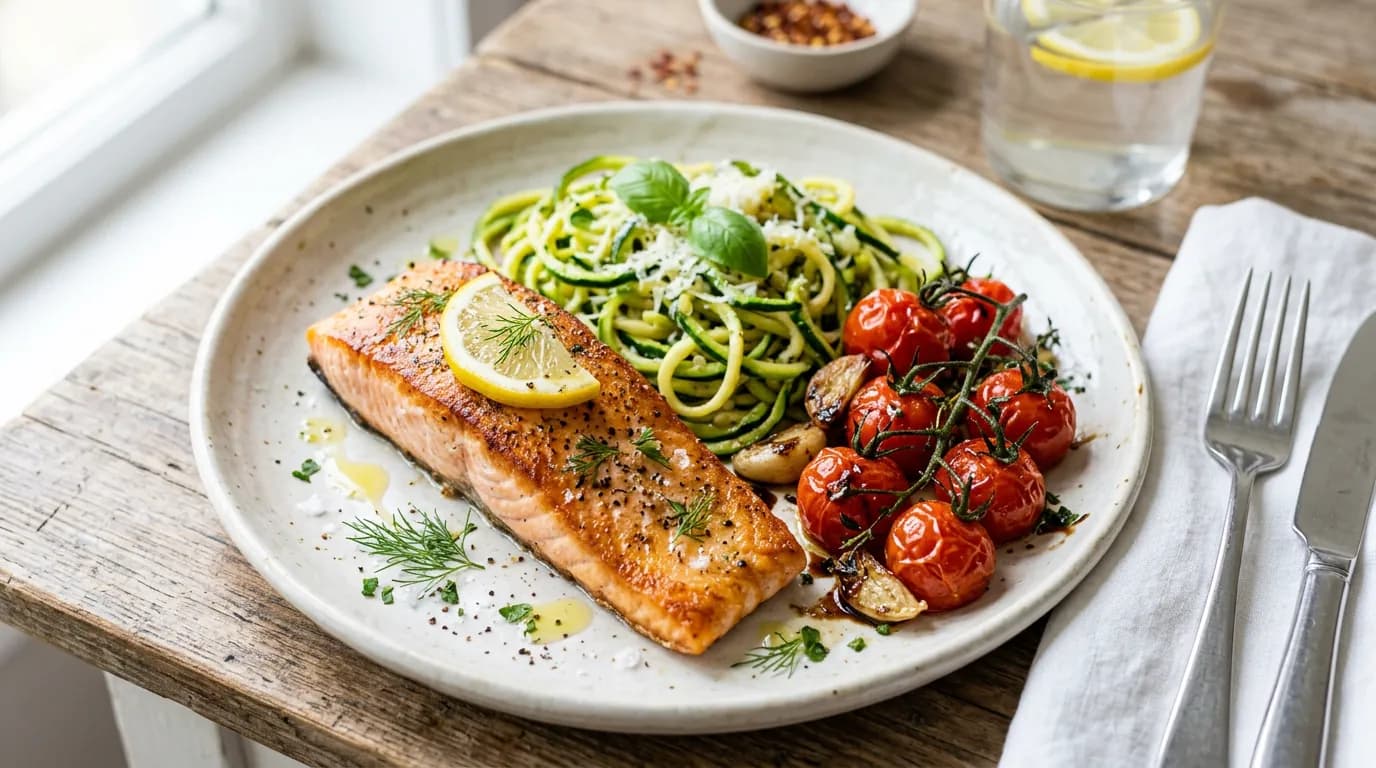
Overview
A low-carb diet limits carbohydrate intake to roughly 50–150 g per day — more flexible than keto, but still well below the 250–300 g a typical Western diet provides. The idea gained mainstream attention through the Atkins Diet in the 1970s and has since been validated by decades of clinical research.
By cutting refined carbs while keeping enough room for vegetables, berries and even small portions of whole grains, low-carb eating offers many of keto's metabolic benefits without the strictness. Your body alternates between burning glucose and fat depending on what's available — a state called metabolic flexibility.
What the science says
- A 2018 BMJ study of 164 adults found that a low-carb diet increased total energy expenditure by about 250 kcal/day compared to a high-carb diet at the same calorie level.
- A 2020 Cochrane review of 61 trials concluded that low-carb diets produced greater short-term weight loss and improved HDL cholesterol and triglycerides.
- The DIRECT trial (2008) showed low-carb outperformed both low-fat and Mediterranean diets for weight loss over two years.
- Blood pressure tends to drop within the first few weeks as insulin levels fall and the kidneys release excess sodium and water.
Unlike strict keto, low-carb lets you eat berries, apples and even some legumes — making it easier to sustain socially and nutritionally.
What to eat
- Protein at every meal — chicken, turkey, beef, pork, fish, shrimp, eggs.
- Full-fat dairy — cheese, butter, heavy cream, Greek yogurt (unsweetened).
- Non-starchy vegetables — leafy greens, bell peppers, tomatoes, mushrooms, asparagus, green beans.
- Healthy fats — olive oil, avocado, coconut oil, nuts, seeds.
- Low-sugar fruits — berries, green apples, kiwi (in moderate amounts).
- Dark chocolate (70 %+ cacao) — a small square as an occasional treat.
What to avoid
- Sugar and sugary drinks — soda, juice, energy drinks, sweetened coffee.
- Refined grains — white bread, white rice, regular pasta, crackers, pastries.
- 'Low-fat' packaged products — they often compensate with added sugar and starch.
- Starchy vegetables in large portions — potatoes, corn, peas.
- Beer and sweet cocktails — dry wine and spirits (neat) are lower-carb alternatives.
Tips for success
- Read nutrition labels: focus on 'net carbs' (total carbs minus fibre).
- Prep protein-rich snacks — hard-boiled eggs, cheese cubes, turkey roll-ups.
- At restaurants, swap fries and bread for a side salad or extra vegetables.
- Drink enough water — lower insulin means your kidneys flush more sodium, so hydration matters.
Who it's best for
- People who want the benefits of carb reduction without the rigidity of keto.
- Those with metabolic syndrome, pre-diabetes or PCOS.
- Anyone who tends to overeat bread, pasta and sugary snacks and wants a natural brake on appetite.
This guide is general information, not medical advice. Talk to a doctor or registered dietitian before you change how you eat, especially if you’re pregnant, take medication or manage a health condition.
Updated: