
Overview
The Balanced Diet follows the guidelines recommended by the World Health Organization and most national dietary authorities. It distributes calories across all three macronutrients — protein, carbohydrates and fat — without excluding any food group, making it the most sustainable approach for long-term health.
Unlike restrictive diets, this pattern keeps your metabolism flexible: your body stays efficient at using both glucose and fat for fuel, energy levels hold steady through the day, and the risk of nutrient deficiencies stays low.
What the science says
- The 2020–2025 USDA Dietary Guidelines recommend 45–65 % of calories from carbs, 20–35 % from fat and 10–35 % from protein for adults.
- A 2022 meta-analysis in The Lancet found that balanced dietary patterns were associated with a 22 % lower risk of all-cause mortality.
- The Harvard Healthy Eating Plate study showed that balanced macros combined with whole-food sources improved cardiovascular markers within 12 weeks.
The Maklafit Balanced split (30 P / 50 C / 20 F) sits inside the evidence-based range and tilts slightly toward protein to support an active lifestyle.
What to eat
- Lean proteins — chicken breast, turkey, fish, eggs, tofu, Greek yogurt.
- Complex carbohydrates — oats, brown rice, quinoa, whole-wheat bread, sweet potatoes.
- Healthy fats — extra-virgin olive oil, avocado, almonds, walnuts, chia seeds.
- Vegetables — at least 3–4 servings a day; vary colours for a broad micronutrient spectrum.
- Fruits — 2–3 servings a day, whole rather than juiced to keep the fibre.
What to limit
- Ultra-processed foods (packaged snacks, instant noodles, frozen meals with long ingredient lists).
- Added sugars — the WHO recommends less than 25 g (6 tsp) of free sugars per day.
- Refined grains — white bread, pastries and sugary cereals; swap for whole-grain alternatives.
- Trans fats and excessive saturated fat — found in fried fast food, margarine and processed baked goods.
Who it's best for
- Anyone looking for a sustainable, no-gimmick eating pattern.
- People who exercise moderately and need steady energy.
- Those coming off a restrictive diet who want to rebuild a healthy relationship with food.
Sample day
- Breakfast — Oatmeal with banana, walnuts and a drizzle of honey.
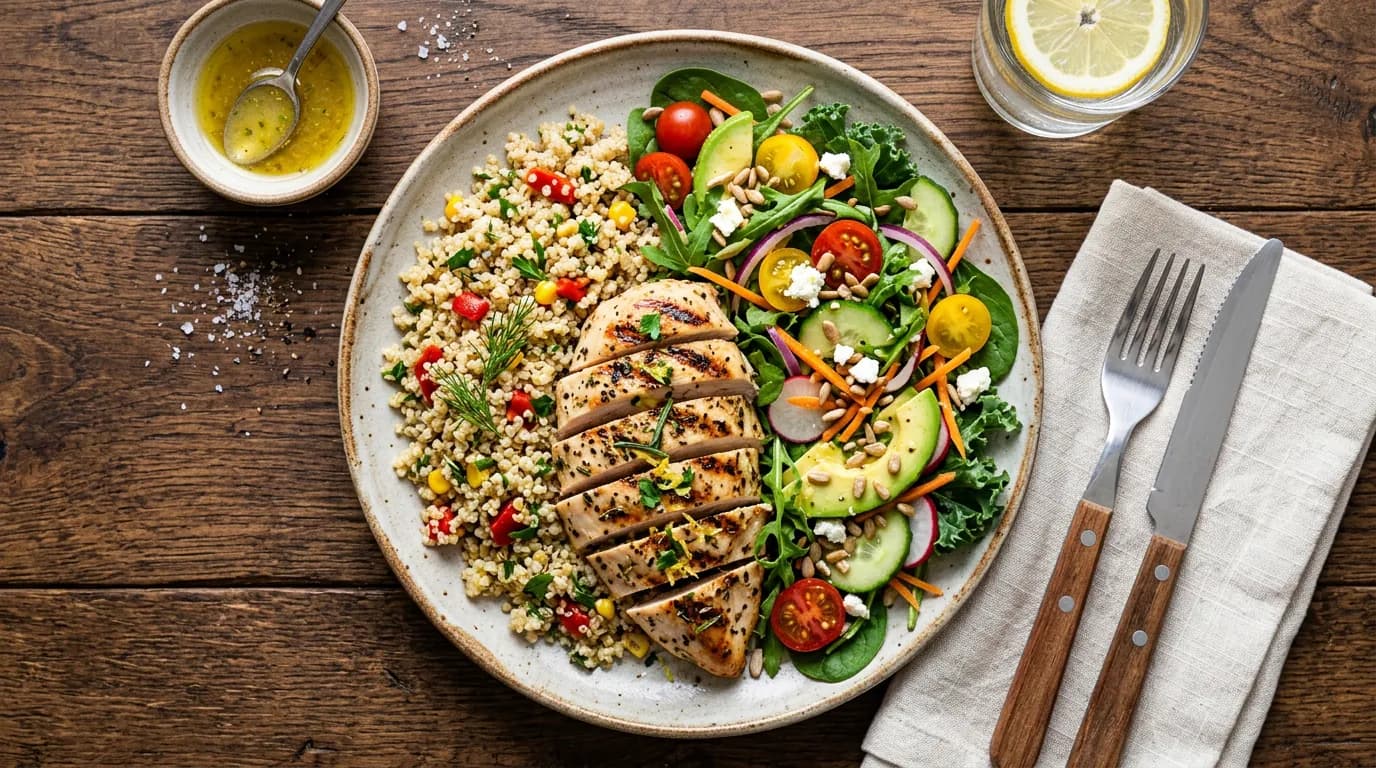
- Lunch — Grilled chicken salad with quinoa, mixed greens, tomatoes and olive oil dressing.
- Snack — Greek yogurt with berries.
- Dinner — Baked salmon, roasted sweet potato and steamed broccoli.
This guide is general information, not medical advice. Talk to a doctor or registered dietitian before you change how you eat, especially if you’re pregnant, take medication or manage a health condition.
Updated: